

Why Choose Us
Competitive Prices
We offer competitive prices for our products, allowing customers to save money on chemical purchases.
Experienced Team
Our team has years of experience in the chemical industry and can offer expert advice and support to customers.
Strong Technical Support
We have a professional technical support team that can provide technical assistance and guidance to customers.
Good Reputation
Has a strong reputation for quality and reliability in the chemical industry.
What is Miconazole Nitrate
Miconazole Nitrate is an antifungal medication that is used to treat various fungal infections of the skin such as athlete's foot, jock itch, ringworm, and yeast infections such as thrush. It works by stopping the growth of fungi and also helps to relieve symptoms such as itching, burning, and irritation. Miconazole Nitrate is available in various forms such as creams, ointments, sprays, and powders and is generally applied topically to the affected area. It may also be prescribed in a higher strength for the treatment of more severe fungal infections.


Advantages Of Miconazole Nitrate
Effective Antifungal Agent
Miconazole Nitrate is a powerful antifungal agent that effectively destroys fungi causing infections such as candidiasis, ringworm, and athlete's foot.
Provides Lasting Relief
Miconazole Nitrate enables long-lasting relief from symptoms such as itching, redness, burning, and inflammation of the affected area.
Wide Range of Applications
Miconazole Nitrate is a versatile medication that can be applied to multiple site infections such as the skin, mouth, and genitals, providing effective relief and treatment.
Easily Accessible
Miconazole Nitrate is readily available both over the counter and via prescription, making it easy for patients to access treatment for various fungal infections.
Low Risk of Allergic Reactions
Miconazole does not usually cause any severe side effects and has a low risk of allergic reactions, making it safe for a broad range of people to use.
Well Suited for Topical Application
Miconazole Nitrate's topical formulations, including cream, gel, spray, and powder, are convenient and straightforward to apply, providing further patient convenience.
Affordable Treatment Option
Compared to other antifungal medications, miconazole nitrate is an affordable treatment option, making it accessible to a broader range of patients.
Features Of Miconazole Nitrate
Antifungal properties
Miconazole nitrate is an antifungal medication that is commonly used to treat fungal infections, such as athlete's foot, jock itch, and ringworm.
Broad-spectrum activity
Miconazole nitrate is effective against a wide range of fungal species, making it a versatile treatment option for many types of fungal infections.
Topical application
Miconazole nitrate is most commonly applied as a topical cream or ointment directly to the affected area of the skin.
Easy to use
Miconazole nitrate creams and ointments are easy to apply and typically require only one or two applications per day.
Minimal side effects
Miconazole nitrate is generally well tolerated and has few side effects. The most common side effect is skin irritation at the site of application.
Over-the-counter availability
Some formulations of miconazole nitrate are available without a prescription, making it easy to obtain and use for minor fungal infections.
Fast-acting
Miconazole nitrate begins working quickly to relieve symptoms of fungal infections, with many patients experiencing relief within the first few days of treatment.
Long-lasting effects
Miconazole nitrate remains active on the skin for several days after application, providing extended protection against fungal infections.
Types Of Miconazole Nitrate
1. Cream – This is the most common form of miconazole nitrate used to treat skin fungal infections. It is applied topically to the affected area.
2. Lotion – Similar to the cream, the lotion is also a topical application of miconazole nitrate. It is used to treat ringworm, jock itch, and athlete's foot.
3. Powder – The powder formulation is used to treat fungal infections in the feet, especially between the toes.
4. Oral Gel – The gel form of miconazole nitrate is used to treat oral thrush, an oral infection caused by the candida fungus.
5. Vaginal cream – This formulation is used to treat vaginal yeast infections in women.
6. Suppositories - These can be inserted into the vagina to treat vaginal infections.
7. Spray – The spray formulation is used to treat fungal infections on the skin, including jock itch and ringworm.
8. Shampoo – The shampoo formulation is used to treat dandruff caused by yeast and fungal infection.
9. Ointment - An ointment is a smooth and oily preparation that is used to treat skin infections.
Content Determination Of Miconazole Nitrate
1.Spectrophotometry
The spectrophotometric method is a commonly used technique for the determination of Miconazole Nitrate content. In this method, Miconazole Nitrate absorbs radiation in the UV region, and its concentration can be determined by measuring the absorbance at a specific wavelength. The absorption maxima of Miconazole Nitrate are reported to be around 231-233 nm. The calibration curve is constructed by preparing a series of standard solutions of known concentrations and measuring their absorbances at the selected wavelength. The content of Miconazole Nitrate in the test sample is then determined by extrapolating the absorbance values from the calibration curve.
2.HPLC:
HPLC is a high-resolution chromatographic technique used for the determination of Miconazole Nitrate content. In this method, the drug is separated from interfering substances, and its concentration is determined by measuring the peak area or peak height. A reverse-phase HPLC method with a C18 column and a mobile phase of methanol-phosphate buffer (60:40 v/v) at a flow rate of 1.0 mL/min has been reported for the determination of Miconazole Nitrate content.
3.Titration
Titration is a simple and sensitive method for the determination of Miconazole Nitrate content. In this method, an acid-base titration is carried out to determine the amount of Miconazole Nitrate present in the sample. A known amount of the sample is dissolved in a suitable solvent, and the solution is titrated against a standardized solution of sodium hydroxide or potassium hydroxide. The endpoint of the titration is detected using an indicator, and the content of Miconazole Nitrate in the sample is calculated from the volume of the titrant used.
Components Of Miconazole Nitrate
Miconazole: This is the active ingredient that works to kill or prevent the growth of fungi by disrupting their cell membranes and inhibiting their synthesis of ergosterol, a key component of the fungal cell wall.
Nitrate: This is a salt form of nitric acid that is added to miconazole to facilitate its absorption into the skin and enhance its antifungal activity.
Other components: Miconazole nitrate may also contain other ingredients such as water, propylene glycol, glyceryl monostearate, cetyl alcohol, isopropyl myristate, and other emollients, preservatives, and stabilizers to help improve its solubility, consistency, and shelf life.
Production Methods Of Miconazole Nitrate


1. Chemical Synthesis: The most common production method of miconazole nitrate is by chemical synthesis. This process involves the reaction of miconazole base with nitric acid and subsequent recrystallization to obtain pure miconazole nitrate.
2. Solid Dispersion: This method involves the melting of miconazole nitrate and dispersing it in a matrix of a polymer or a surfactant to improve its solubility and bioavailability.
3. Micronization: This process involves reducing the particle size of miconazole nitrate to improve its dissolution rate and surface area. This can be achieved by milling, micronization, or high-pressure homogenization.
4. Supercritical Fluid Technology: Supercritical fluid technology involves the use of supercritical carbon dioxide as a solvent to extract and purify miconazole nitrate from its raw materials.
5. Soft Gel Capsules: Soft gel capsules are a popular dosage form for miconazole nitrate. This production method involves encapsulating miconazole nitrate in a soft, gelatin shell, which improves its stability and bioavailability.
What Are The Applications Of Miconazole Nitrate
1. Antifungal Treatment: Miconazole nitrate can be used to treat various fungal infections such as athlete's foot, ringworm, jock itch, and nail infections.
2. Vaginal Infection Treatment: Miconazole nitrate can be used to treat vaginal infections such as yeast infections.
3. Oral Thrush Treatment: Miconazole nitrate can be used to treat oral thrush, a fungal infection that affects the mouth and throat.
4. Skin Infection Treatment: Miconazole nitrate can be used to treat skin infections caused by fungi.
5. Prevention of Fungal Infections: Miconazole nitrate can be used as a preventative measure against fungal infections in high-risk individuals such as those with weakened immune systems.
6. Topical Steroid Combination: Miconazole nitrate is sometimes used in combination with topical steroids to treat skin conditions like eczema.
7. Ear Infection Treatment: Miconazole nitrate can be used to treat fungal ear infections.
8. Nail Infection Treatment: Miconazole nitrate can be used to treat nail infections caused by fungi.
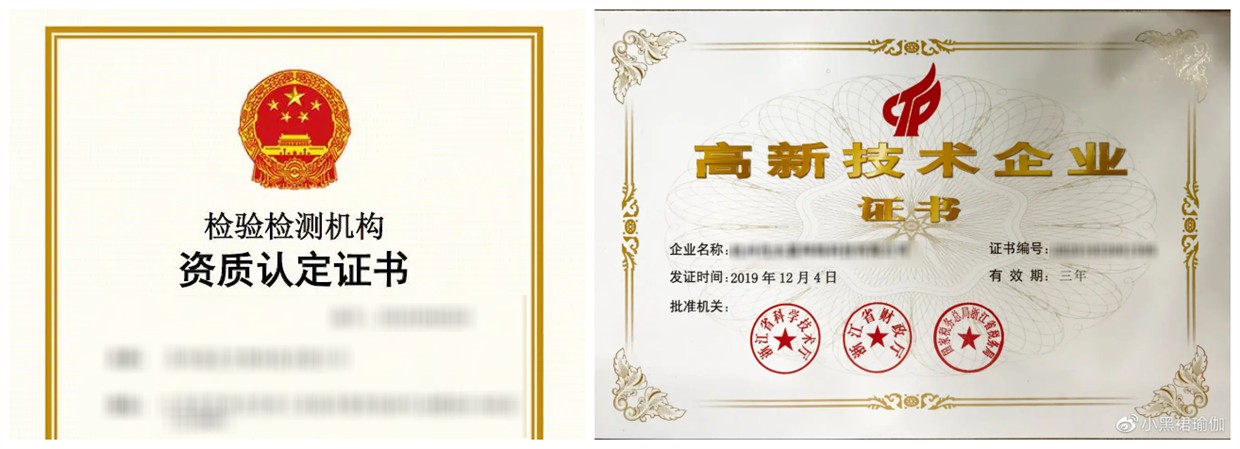
Certifications


Our main products are 1,1,1,3,3,3-Hexamethyldisilazane; Hexamethyldisiloxane; Methyl Hydrogen Silicone Fluid; 1,1,3,3-Tetramethyldisiloxane;P-Phenylenediamine; Alpha-(2,4-Dichlorophenyl)- Imidazole-1-Ethanol;P-Bromofluorobenzene; Cyclohexaformyl Chloride; Fructone, etc. These products have been exported to worldwide. With rigorous attitude, sincere service and excellent products, we have established long and stable cooperative relationships with customers in Europe, America, Japan, Korea, India ,etc. And have gained great reputation from them.
FAQ
Hot Tags: miconazole nitrate, China miconazole nitrate manufacturers, suppliers, factory, pharmaceutical intermediates, pharmaceutical intermediate lead time, pharmaceutical intermediate diversification, inorganic pharmaceutical intermediates, pharmaceutical intermediate warehousing, chemicals for pharmaceutical intermediates