


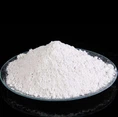


Hey there! I'm a supplier of 1,3 - Cyclohexanedione, and today I'm super stoked to share with you how this nifty little compound can be used to construct complex organic molecules.
First off, let's get to know 1,3 - Cyclohexanedione a bit better. It's a cyclic diketone with a six - membered ring and two carbonyl groups at the 1st and 3rd positions. This structure gives it some really unique chemical properties, making it a key player in organic synthesis.
One of the most common ways to use 1,3 - Cyclohexanedione is through condensation reactions. Condensation reactions are like chemical matchmaking. Two or more molecules come together, and a small molecule (usually water) is kicked out in the process. For example, when 1,3 - Cyclohexanedione reacts with an aldehyde or a ketone in the presence of a base, it forms a new carbon - carbon double bond. This reaction is known as the Knoevenagel condensation.
The beauty of this reaction is that it can be used to build up larger and more complex molecules. You can choose different aldehydes or ketones to react with 1,3 - Cyclohexanedione, and each combination will give you a different product. Let's say you use an aromatic aldehyde like benzaldehyde. The reaction will result in a molecule with both a cyclohexanedione ring and an aromatic group, which can be further modified to create even more complex structures.
Another cool reaction that 1,3 - Cyclohexanedione can participate in is the Michael addition. In a Michael addition, a nucleophile adds to an α,β - unsaturated carbonyl compound. 1,3 - Cyclohexanedione can act as a nucleophile due to the acidic hydrogens next to the carbonyl groups. When it reacts with an α,β - unsaturated ketone or ester, it forms a new carbon - carbon bond. This is a great way to introduce new functional groups and build up the molecular complexity.
Now, let's talk about some real - world applications of the molecules constructed using 1,3 - Cyclohexanedione. In the pharmaceutical industry, these complex organic molecules can be used as potential drug candidates. For instance, some of the compounds synthesized from 1,3 - Cyclohexanedione have shown anti - inflammatory, anti - cancer, and anti - microbial properties.
If you're into the world of materials science, molecules made from 1,3 - Cyclohexanedione can be used to create new polymers and materials with unique properties. These materials can have applications in areas like electronics, coatings, and packaging.
Let's take a closer look at some related compounds that are also important in organic synthesis. You might be interested in Amino Methyl Benzoic Acid. It's a useful pharmaceutical intermediate that can be combined with molecules derived from 1,3 - Cyclohexanedione to create more advanced drug candidates. Another compound is Imidazole - 1 - ethanol Antifungal Agent. The combination of imidazole - based compounds with those from 1,3 - Cyclohexanedione can lead to the development of more effective antifungal drugs. And don't forget about 2,3 - Pyridinedicarboxylic Acid, which can also be used in combination with 1,3 - Cyclohexanedione derivatives in various synthetic routes.
When it comes to actually carrying out these reactions, there are a few things to keep in mind. First, the reaction conditions are crucial. The choice of solvent, temperature, and catalyst can all affect the reaction rate and the yield of the product. For example, in the Knoevenagel condensation, a polar aprotic solvent like dimethylformamide (DMF) is often used, and a mild base like piperidine can be the catalyst.
Second, purification of the products is important. After the reaction is complete, the product mixture usually contains unreacted starting materials, by - products, and the desired product. Techniques like column chromatography, recrystallization, and distillation can be used to separate and purify the desired compound.


If you're thinking about using 1,3 - Cyclohexanedione in your research or production, I'm here to help. As a supplier, I can provide you with high - quality 1,3 - Cyclohexanedione at competitive prices. Whether you're a small - scale researcher or a large - scale manufacturer, I've got the right quantity for you. If you're interested in discussing your specific needs or want to place an order, don't hesitate to reach out. We can have a chat about how 1,3 - Cyclohexanedione can fit into your projects and work together to make your organic synthesis goals a reality.
In conclusion, 1,3 - Cyclohexanedione is a versatile and powerful building block in organic synthesis. Its ability to participate in various reactions allows us to construct complex organic molecules with a wide range of applications. So, if you're in the market for 1,3 - Cyclohexanedione or want to learn more about its potential in your work, give me a shout. Let's explore the exciting world of organic synthesis together!
References:
- Smith, M. B., & March, J. (2007). March's Advanced Organic Chemistry: Reactions, Mechanisms, and Structure. John Wiley & Sons.
- Carey, F. A., & Sundberg, R. J. (2007). Advanced Organic Chemistry Part A: Structure and Mechanisms. Springer.