


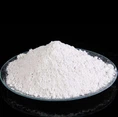

Hey there! As a supplier of 2,6 - Xylidine, I'm super excited to dive into the surface - active agent applications of this awesome compound. In this blog, I'll walk you through what 2,6 - Xylidine is, how it works as a surface - active agent, and the various industries where it shines.
First things first, let's get to know 2,6 - Xylidine a bit. It's an organic compound with a unique chemical structure. Chemically, it's an aromatic amine with two methyl groups attached to the benzene ring at the 2 and 6 positions. This structure gives it some interesting properties that make it suitable for a range of applications, especially in the realm of surface - active agents.
Surface - active agents, also known as surfactants, are substances that can reduce the surface tension between two liquids, a liquid and a gas, or a liquid and a solid. They have a hydrophilic (water - loving) head and a hydrophobic (water - hating) tail. This dual nature allows them to accumulate at interfaces and perform all sorts of cool functions.
So, how does 2,6 - Xylidine fit into the picture of surface - active agents? Well, its chemical structure gives it the ability to interact with different types of molecules. The aromatic ring and the amine group can participate in various chemical reactions and intermolecular forces. These interactions are crucial for its performance as a surfactant.
One of the key applications of 2,6 - Xylidine as a surface - active agent is in the field of emulsions. Emulsions are mixtures of two immiscible liquids, like oil and water. Without a surfactant, these two liquids would quickly separate. But when 2,6 - Xylidine is added, it forms a layer at the interface between the oil and water droplets. The hydrophobic part of the 2,6 - Xylidine molecule dissolves in the oil phase, while the hydrophilic part remains in the water phase. This stabilizes the emulsion, preventing the oil and water from separating. This is super useful in industries such as food, cosmetics, and pharmaceuticals.
In the food industry, emulsions are used in products like mayonnaise, salad dressings, and ice cream. 2,6 - Xylidine can help create stable emulsions, ensuring that these products have a consistent texture and appearance. For example, in mayonnaise, it helps keep the oil droplets dispersed evenly in the water - based phase, giving it that smooth and creamy texture we all love.
In the cosmetics industry, emulsions are the basis of many products such as creams, lotions, and makeup. 2,6 - Xylidine can be used to create stable oil - in - water or water - in - oil emulsions. This helps in formulating products that are easy to apply, spread evenly on the skin, and have a long - shelf life. For instance, in a moisturizing cream, it ensures that the oil and water components stay mixed, providing effective hydration to the skin.
The pharmaceutical industry also benefits from the emulsion - stabilizing properties of 2,6 - Xylidine. Many drugs are formulated as emulsions to improve their solubility and bioavailability. By using 2,6 - Xylidine as a surfactant, pharmaceutical companies can create stable drug emulsions that are easier to administer and more effective in delivering the active ingredients to the body.
Another important application of 2,6 - Xylidine as a surface - active agent is in the area of wetting agents. Wetting agents are used to reduce the contact angle between a liquid and a solid surface, allowing the liquid to spread more easily over the surface. This is useful in industries such as printing, painting, and textile manufacturing.
In the printing industry, wetting agents are used to ensure that the ink spreads evenly on the printing surface. 2,6 - Xylidine can help reduce the surface tension of the ink, allowing it to wet the paper or other printing substrates more effectively. This results in clearer and more vibrant prints.
In the painting industry, wetting agents are essential for proper paint application. They help the paint spread evenly on the surface, covering it completely and smoothly. 2,6 - Xylidine can be used to improve the wetting properties of paint, reducing the formation of streaks and uneven patches. This leads to a more professional - looking finish.
In the textile manufacturing industry, wetting agents are used in processes such as dyeing and finishing. They help the dye penetrate the fabric fibers more evenly, resulting in a more uniform color. 2,6 - Xylidine can be used to enhance the wetting ability of the dye solution, improving the overall quality of the dyed fabric.


2,6 - Xylidine also finds applications as a dispersing agent. Dispersing agents are used to break up and disperse solid particles in a liquid medium. They prevent the particles from aggregating and settling, keeping them evenly distributed in the liquid. This is important in industries such as pigments, ceramics, and electronics.
In the pigment industry, dispersing agents are used to disperse pigment particles in a liquid carrier, such as paint or ink. 2,6 - Xylidine can adsorb onto the surface of the pigment particles, creating a repulsive force between them. This prevents the particles from clumping together, ensuring that the pigment dispersion remains stable and the color is consistent.
In the ceramics industry, dispersing agents are used to disperse ceramic powders in a liquid binder. This helps in creating a homogeneous ceramic slurry that can be easily molded into various shapes. 2,6 - Xylidine can improve the dispersion of the ceramic powders, resulting in better - quality ceramic products with fewer defects.
In the electronics industry, dispersing agents are used in the production of electronic materials, such as conductive inks and pastes. They help disperse conductive particles, such as silver or copper, in a liquid medium. 2,6 - Xylidine can be used to enhance the dispersion of these particles, improving the conductivity and performance of the electronic materials.
Now, I'd like to mention some related products that you might be interested in. If you're into hydrophobic coatings, check out HMDSO For Hydrophobic Coatings. It's a great option for creating water - repellent surfaces. Also, 4 - Chlorobenzoyl Chloride 122 - 01 - 0 is an important intermediate in the pharmaceutical and chemical industries. And for another interesting compound, take a look at 25561 30 2.
If you're in the market for 2,6 - Xylidine or any of these related products, I'm here to help. Whether you need a small sample for testing or a large - scale supply for your production, I can provide you with high - quality products at competitive prices. Don't hesitate to reach out to start a discussion about your specific requirements.
In conclusion, 2,6 - Xylidine has a wide range of surface - active agent applications across multiple industries. Its unique chemical structure and properties make it a valuable ingredient in emulsions, wetting agents, dispersing agents, and more. If you're looking for a reliable supplier of 2,6 - Xylidine, I'd love to hear from you. Let's work together to meet your business needs!
References:
- "Surfactants: Chemistry and Technology" by Milton J. Rosen
- "Industrial Applications of Surfactants" edited by D. R. Karsa