


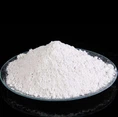

Hey there! As a supplier of 2,4 - Dimethylaniline, I'm super excited to share some cool stuff about its chemical properties with you.
Let's start from the basics. 2,4 - Dimethylaniline has a molecular formula of C₈H₁₁N. It's an organic compound that belongs to the class of aromatic amines. You know, those compounds that have that distinct benzene - like ring structure with an amino group attached.
One of the most notable chemical properties of 2,4 - Dimethylaniline is its basicity. Just like other amines, it can act as a base in chemical reactions. The lone pair of electrons on the nitrogen atom in the amino group can accept a proton (H⁺). This makes it capable of reacting with acids to form salts. For example, when it reacts with hydrochloric acid (HCl), it forms 2,4 - Dimethylaniline hydrochloride. The reaction is pretty straightforward: C₈H₁₁N + HCl → C₈H₁₁NH⁺Cl⁻. This property is quite useful in various industrial processes where the formation of such salts can be used for purification or to modify the solubility of the compound.
Another important aspect is its reactivity towards electrophilic aromatic substitution reactions. The benzene ring in 2,4 - Dimethylaniline is electron - rich due to the presence of the amino group and the two methyl groups. The amino group is an electron - donating group through resonance, and the methyl groups are electron - donating through the inductive effect. This makes the benzene ring more susceptible to attack by electrophiles.
In electrophilic aromatic substitution, the most common reaction is nitration. When 2,4 - Dimethylaniline reacts with a nitrating mixture (usually a combination of concentrated nitric acid and concentrated sulfuric acid), a nitro group ( - NO₂) is introduced onto the benzene ring. The amino group and the methyl groups direct the incoming nitro group to specific positions on the ring. The amino group is an ortho - para director, and the methyl groups also influence the regioselectivity of the reaction.
2,4 - Dimethylaniline can also undergo oxidation reactions. Oxidizing agents like potassium permanganate (KMnO₄) or chromic acid (H₂CrO₄) can react with it. Oxidation can lead to the formation of various products depending on the reaction conditions. Under mild oxidation conditions, it might form products with oxygen - containing functional groups on the benzene ring or the side - chains. However, under more severe conditions, the entire molecule can be broken down into smaller fragments.
Now, let's talk about its solubility. 2,4 - Dimethylaniline is sparingly soluble in water. This is because it's a relatively non - polar organic compound, while water is a highly polar solvent. But it's soluble in many organic solvents like ethanol, ether, and chloroform. This solubility behavior is crucial in industrial applications where it might need to be dissolved in a particular solvent for a chemical reaction or a purification process.


In addition to these basic chemical properties, 2,4 - Dimethylaniline has some interesting physical properties that are related to its chemical nature. It has a boiling point of around 214 - 216 °C and a melting point of about 15 - 17 °C. These values can be affected by impurities, so it's important to have a high - purity product for accurate applications.
The chemical properties of 2,4 - Dimethylaniline also play a role in its stability. It's relatively stable under normal conditions, but it can be sensitive to light, heat, and air. Prolonged exposure to air can cause oxidation, and exposure to light can sometimes lead to photochemical reactions. So, proper storage conditions are essential to maintain its quality.
Now, I'd like to mention some related products that you might also be interested in. Check out 24155 - 42 - 8 Imidazole Ethanol, Hexamethyldisilazane HMDS, and Silicone Fluid For Textile Treatment. These are all great products with their own unique properties and applications.
If you're in the market for 2,4 - Dimethylaniline or any of these related products, we're here to help. Whether you're involved in research, manufacturing, or any other industry that requires high - quality chemicals, we can provide you with the best 2,4 - Dimethylaniline available. Our product is carefully produced and tested to ensure its purity and quality. So, if you're interested in purchasing or just want to have a chat about your specific needs, don't hesitate to reach out and start a procurement discussion. We're looking forward to working with you!
References:
- "Organic Chemistry" by Paula Yurkanis Bruice
- "Advanced Organic Chemistry" by Jerry March